
The Lowdown on the Ketogenic Diet

Is the ‘keto’ diet the latest celebrity diet or could it be the lifestyle modern society needs in order to address spiralling obesity rates and metabolic disease? If you haven’t heard of the ketogenic diet here is a run down:

Foods consumed are high in fat with a very low carbohydrate intake. By reducing carbs and replacing with fat the body goes into a metabolic state called ketosis. Ketosis is where the body uses ketones from the fats as its source of energy rather than from carbohydrates. Ketones are water soluble molecules produced by the liver from fatty acids when carbohydrate consumption is restricted. Ketones are converted into acetyl-CoA which are eventually used (after some complicated biological functions!) for energy by the mitochondria in our cells for physical as well as mental energy.

“Buy Local / National” Moves In Public Procurement Could Lead To Dangerous Protectionist Behaviour

We wrote last week about the forces around the world that seem to be moving governments and nations towards a more protectionist attitude to trade and also to government procurement. This is being seen in Europe, Australia, the US, India and various African nations too. At its extreme, it sees government procurement expenditure primarily as a tool to support “local” or national interests and suppliers.

As this movement continues, we are seeing little written in defence of free trade, open access to markets, and the benefits of a public procurement approach that puts other factors – such as value – at the heart of the activity. So we thought it was worth re-stating the negatives around a protectionist approach to procurement, and some of the benefits of openness.

Corbyn & Labour – Using Public Procurement To Achieve Political and Social Goals

We started writing this article a few days ago, before the election announcement … it is perhaps even more relevant now!

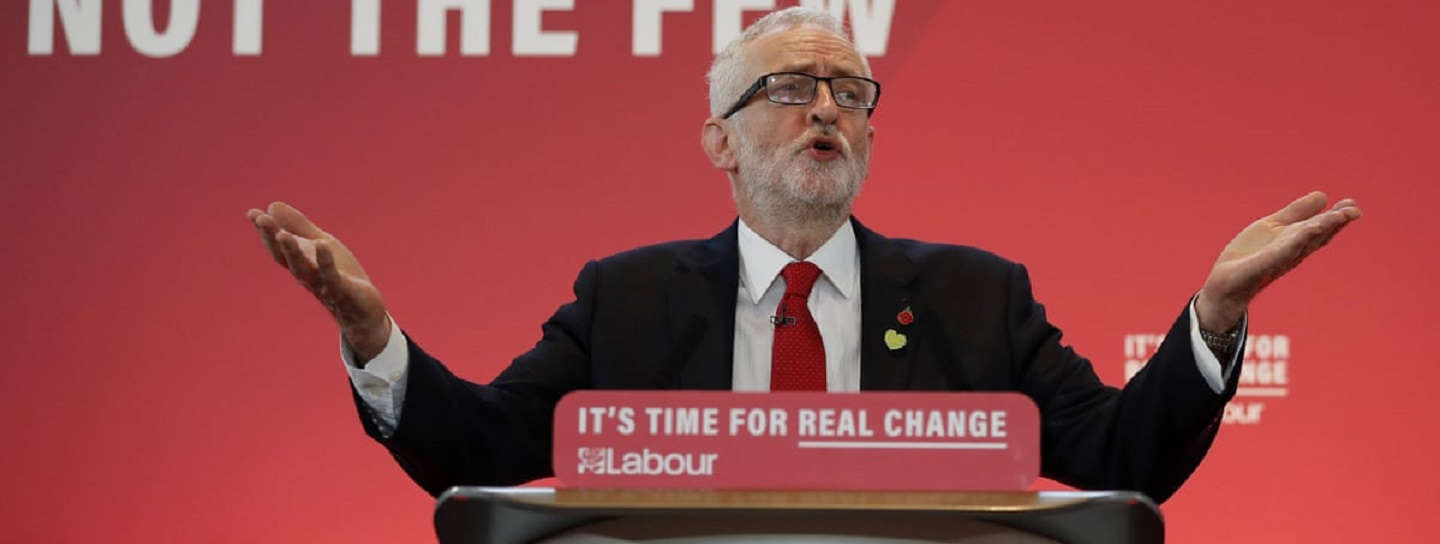
So, our challenge for today is this. How do we start an article “Jeremy Corbyn made a speech recently” and retain our readers beyond that first sentence?

For our non-UK readers, Corbyn leads the Labour Party, which should be the main opposition party to the ruling Conservatives but under his stewardship has sunk in the opinion polls and is getting to the point where its actual survival is at risk. He is an old school socialist, of the sort we don’t see very often even in the Labour Party these days. Beyond that, there have been suggestions that on top of this political philosophy not appealing to many voters, there are issues with his basic intellect, leadership skills and judgement.

Nationalism on the Rise – Need To Keep an Eye on Public Procurement

As Donald Trump continues to delight, astound and horrify the world – all depending on your outlook – it seems likely that we are moving into a world of greater nationalism in terms of both politics and economics. Trump appears to see international trade as much more of a contest than an opportunity for win:win outcomes. He feels that countries like China and Mexico have gained more from the US than vice versa, and maybe he is right.

Other countries will no doubt respond though if he does take action, and then we have the risk of  falling into a trade war that ultimately won’t benefit anyone. Trump does not explain how slapping an import tax on to goods coming into the US is going to help the lower income families in his country who will be faced by higher prices – not all factories can instantly re-locate to Texas.

Closer to home, in the UK, the recent Building Our Industrial Strategy “Green Paper” from the government contained a few good ideas and worthwhile suggestions. But the section on public procurement also contained some slightly disturbing comments. It starts well – it is hard to argue with this.

“This means creating the right conditions to put UK supply chains in the strongest possible position to compete for contracts on the basis of best value for the taxpayer”.

But it is the use of the “balanced scorecard” that raises some alarm bells.

Kombucha Vinegar VS Apple Cider Vinegar

We know the health benefits of drinking fermented probiotics drinks like kombucha. But are there any benefits to consuming kombucha vinegar? Raw unpasteurised apple cider vinegar (ACV) has been used as a health tonic & natural preservative for hundreds of years – can we get the same benefits from a kombucha vinegar?

Kombucha vinegar is simply kombucha which has fermented twice the amount of time & turned sour. So it’s very easy to make – particularly if you forget about your ‘buch culture sometimes! Just make your kombucha as you normally would with a SCOBY (symbiotic culture of bacteria and yeasts) black or green tea & sugar. Allow the culture to consume all the sugar & ferment for up to 60 days. (Tip: If you’re just starting out making your own kombucha & find that your kombucha is too sour for your taste just keep fermenting to make your own vinegar!).

LCTA and Assessing “Value” In Procurement – Tricky but Key

We wrote recently here about the US government “lowest cost technically acceptable” (LCTA) policy, that requires an organisation to choose the lowest cost tender from potential providers that meets the basic requirements defined by the buyer.

It seems to be becoming less popular, but as said in the previous article, it does highlight a couple of interesting and quite challenging issues for public sector buyers. The first is linked to the whole issue of “value”, how it is defined and measured – and evaluated in tenders. The logic for not accepting the lowest cost tender – or the lowest cost acceptable tender – is that non-cost factors in a bidder’s proposal can add real value to that proposal and make it the “best” selection for the buyer to make.

So we look at a proposal for software and assess that some of the additional features of one supplier’s proposal add value that makes it worth paying an additional amount of money over and above a more basic proposal. That may be true even if the basic proposal meets all the stated needs in the tender documentation. It may be that the buyer did not realise such features were available, or assesses that the additional featured will bring real benefits to users.

This Week’s News from the Public Procurement Cafe

Webinar – ICLEI’s  initiatives, activities and achievements in the field of sustainable and innovation procurement

Hosted by the United Nations Environment Programme Division of Technology, Industry and
Economics, Cities and Lifestyles Unit, this webinar on September 13 is co-organised with ICLEI – Local Governments for Sustainability (ICLEI). The webinar presents the initiatives, activities and achievements of ICLEI in the field of sustainable and innovation procurement.

Human Rights and Public Procurement – International Learning Lab Hits Its Stride

The International Learning Lab on Public Procurement and Human Rights was launched last year and is co-organised by the Danish Institute for Human Rights (DIHR), the International Corporate Accountability Roundtable (ICAR), the Harrison Institute at Georgetown Law, the Public Procurement Research Group of Nottingham University, and several other people and organisations, including our friend Andy Davies of the London Universities Purchasing Consortium.

This is a hot topic in public procurement, and only likely to get hotter, we suspect. Stories about conditions in electronics and garment factories for instance have hit the national press. Citizens and taxpayers are rightly horrified to think that ‘their’ money, being spent by contracting authorities via public procurement, may be helping support human rights abuses in those and other areas.

So the Learning Lab aims to be a platform and mechanism for:

–  experience-sharing among procurement actors on approaches to integrating respect for human rights;

–  generating knowledge about public procurement law and policy and human rights;

–  producing and disseminating tools and guidance to build capacity to integrate human rights issues among procurement professionals; and

–  promoting coherence between procurement and human rights in international and regional frameworks and initiatives.

Public Procurement Trade-offs: Commerciality Versus Corruption

For each of the trade-offs, we are looking in more detail at the nature of the potential conflict, then suggest some steps that public procurement professionals can take to minimise the potential for real issues and problems. The nature of these trade-offs means that there are no magic solutions, but there are ways to reduce the risks. Today, a trade-off that can have huge implications for contracting authorities and even entire countries.

Single-Supplier Framework In London – Guaranteeing Value Will Not Be Easy

We picked up on a new UK public sector contract the other day, that raises some interesting issues going beyond the specific category, contracting authority or indeed country. It concerns a framework agreement put in place by three London boroughs to provide technology-related services. Here are the details as reported by Mobile News.

Pan-London agreement will see BT provide ICT and UC services to three boroughs in the capital.

BT has won a £200 million contract as the sole supplier to provide a range of ICT products and services under a new pan-London public sector procurement framework agreement.

Potential customers can choose from a number of products and services that includes local and wide area networking, cloud services, fixed and mobile telephony, unified communications and conferencing.

It is the latest of four frameworks established by the tri-borough, comprising the Royal Borough of Kensington and Chelsea, the London Borough of Hammersmith and Fulham and Westminster City Council.